The Ultimate Guide to Life Jackets & Buoyancy Aids
The Ultimate Guide to Life Jackets & Buoyancy Aids
Whether you're heading out sailing, kayaking, paddleboarding, fishing or simply spending more time around the water, wearing the right personal flotation device (PFD) is one of the most important safety decisions you can make.
But with different buoyancy ratings, styles, inflation systems and activity-specific designs available, choosing the right life jacket or buoyancy aid isn't always straightforward.
That's where this guide comes in.
At Wetsuit Outlet, we stock a huge range of buoyancy aids and life jackets from leading watersports brands including Crewsaver, GUL, Gill, Helly Hansen, JOBE, Musto, Palm, Peak PS, Spinlock, Yak and Zhik.
This guide will help you understand the differences between them, what buoyancy rating you need, how your activity affects your choice and how to make sure your PFD fits correctly.
A life jacket is a personal flotation device designed to help keep you afloat in the water and, depending on its design and buoyancy rating, help turn an unconscious person onto their back with their airway clear of the water.
Life jackets are generally designed for situations where you may be in the water for longer, where help may not be immediately available, or where conditions are more challenging.
Higher-buoyancy life jackets are particularly important for coastal and offshore activities, where the ability to stay afloat and maintain an effective position in the water can be critical.
Inflatable life jackets are commonly used for sailing and other activities where freedom of movement is important. They remain relatively slim and unobtrusive until they are inflated.
What is a buoyancy aid?
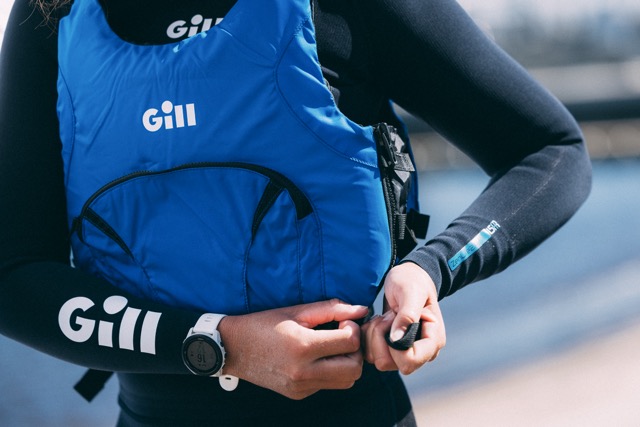
A buoyancy aid is designed to provide flotation and help you stay afloat, while allowing a high level of freedom of movement.
Unlike many life jackets, a buoyancy aid is not generally designed to turn an unconscious person face-up in the water.
This makes buoyancy aids particularly suited to activities where you are expected to be conscious, mobile and able to help yourself — such as kayaking, canoeing, paddleboarding, dinghy sailing and many other watersports.
The current Wetsuit Outlet range includes 50N buoyancy aids alongside higher-buoyancy options, with specialist designs for kayaking, sailing, SUP and other activities.
The simple rule: If you're taking part in an active watersport where you'll be moving, paddling or regularly getting wet, a buoyancy aid may be the right choice. If you need a device designed to provide greater protection while waiting for rescue, a life jacket may be more appropriate.
Always consider the conditions, your activity, your swimming ability and how quickly help would be available.
Life Jacket vs Buoyancy Aid: What's the Difference?
Buoyancy Aid
Life Jacket
Primary purpose
Helps a conscious person stay afloat
Designed to provide greater flotation and support
Typical buoyancy
50N or activity-specific
Usually 100N, 150N or 275N
Freedom of movement
Excellent
Generally more restrictive
Self-righting
Not designed to turn an unconscious person face-up
Designed to help keep the airway clear
Best for
Kayaking, SUP, dinghy sailing and active watersports
Coastal sailing, offshore sailing, boating and situations where rescue may take longer
Inflatable options
Generally no
Common
Suitable for regular immersion?
Yes, depending on activity
Depends on design
The RYA explains that Level 50 buoyancy aids are intended for water-confident users in sheltered or near-shore situations where help is close by, while Level 150 lifejackets are designed for coastal and offshore waters and are intended to help turn an unconscious wearer face-up.
Understanding Buoyancy Ratings
One of the most important things to understand when choosing a PFD is its buoyancy rating.
Buoyancy is measured in Newtons (N).
The higher the number, the greater the amount of flotation the device is designed to provide.
50N Buoyancy Aids
50N buoyancy aids are designed primarily for confident swimmers taking part in watersports in sheltered waters or close to shore, where assistance is readily available.
They prioritise freedom of movement, making them ideal for activities such as:
Kayaking
Canoeing
Paddleboarding
Dinghy sailing
Waterskiing
Wakeboarding
Other active watersports
A 50N buoyancy aid isn't intended to turn an unconscious person face-up.
Wetsuit Outlet stocks 50N options from brands including Crewsaver, GUL, Gill, JOBE, Palm, Spinlock, Zhik, Yak and others.
100N Buoyancy
100N devices provide more buoyancy than a standard 50N aid and are intended for sheltered waters where you may need to remain afloat while waiting for assistance.
They offer a useful middle ground between the freedom of movement associated with a buoyancy aid and the increased flotation of a life jacket.
However, they are not intended for rough or offshore conditions.
150N Life Jackets
150N is one of the most common ratings you'll see when looking for a proper life jacket.
These are designed for use in coastal and offshore waters and provide enough buoyancy to help turn an unconscious person onto their back, keeping their mouth and nose clear of the water.
150N life jackets are commonly used for:
Yacht sailing
Coastal sailing
Offshore sailing
Fishing
Motor boating
General boating
The RYA recommends a minimum of 150N for life jackets intended for coastal and offshore use.
275N Life Jackets
275N life jackets provide the highest level of buoyancy in the standard range.
They are designed for more extreme offshore conditions and situations where the wearer may be wearing heavy protective clothing or clothing that can trap air.
They are considerably bulkier than lower-rated life jackets, particularly when inflated, so they are not normally necessary for everyday watersports.
Which Buoyancy Aid Do I Need?
The best buoyancy aid depends heavily on what you're doing.
Kayaking & Canoeing
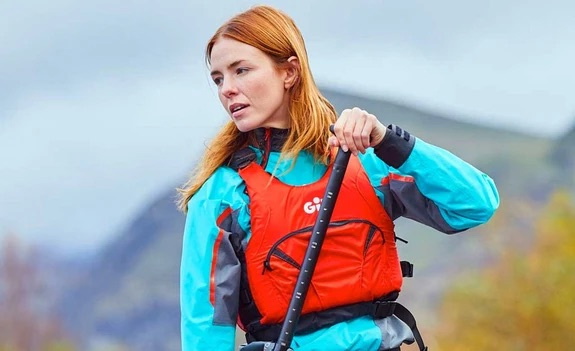
Kayakers need a buoyancy aid that provides flotation without restricting movement through the shoulders and arms.
Look for:
High arm mobility
A close, secure fit
Adjustable shoulder and waist straps
Shorter cuts
Front or side entry
Multiple adjustment points
Pockets for essential equipment
Kayak-specific designs from brands such as Palm and Yak are built around the movement required for paddling. Wetsuit Outlet's range includes a broad selection specifically categorised for kayaking.
Paddleboarding & SUP
A buoyancy aid can provide an additional level of flotation when paddleboarding, particularly on rivers, lakes, canals and coastal waters.
For SUP, freedom of movement is particularly important.
Look for a design that:
Allows unrestricted paddling
Fits securely around the torso
Doesn't ride up
Doesn't interfere with your paddle stroke
Is comfortable when worn for extended periods
For general recreational SUP, a 50N buoyancy aid can be appropriate where the conditions and user's ability match the intended use.
Always consider your location and conditions rather than relying solely on the buoyancy rating.
Dinghy Sailing
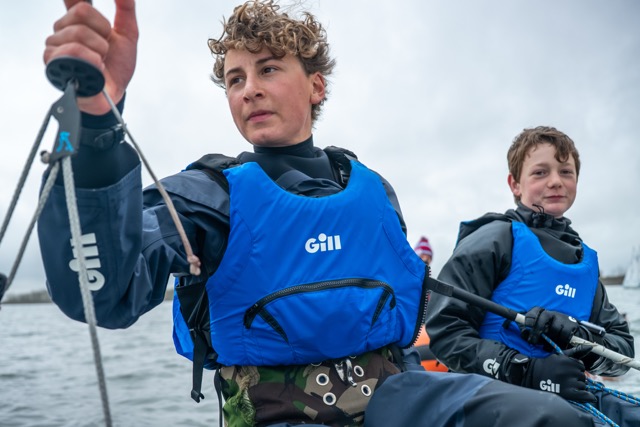
Dinghy sailors need a balance between buoyancy, movement and comfort.
A good sailing buoyancy aid should allow you to:
Move freely around the boat
Hike out
Climb back aboard
Work around a trapeze
Move between different positions quickly
Many sailing-specific buoyancy aids feature close-fitting designs and cuts designed to work around a trapeze hook.
Brands including Gill, GUL, Helly Hansen, Musto, Spinlock and Zhik offer sailing-focused options.
Yacht & Offshore Sailing
When you're sailing offshore, the requirements change.
You may be further from help, exposed to colder water and rougher conditions, and wearing more clothing.
This is where a properly specified life jacket becomes much more important than a basic buoyancy aid.
Look for features such as:
150N or greater buoyancy
Automatic inflation
Manual override
Crotch straps
Whistle
Reflective panels
Spray hood
Light
Harness attachment point
Comfortable fit over sailing layers
Inflatable life jackets are particularly popular for offshore sailing because they provide substantial buoyancy while remaining relatively low-profile before inflation.
Inflatable vs Foam Buoyancy
There are two main approaches to flotation.
Foam / Inherently Buoyant
Foam buoyancy aids contain flotation material that provides buoyancy immediately when you enter the water.
There is no inflation mechanism to activate.
This makes them particularly popular for active watersports where getting wet is expected.
Advantages:
Always buoyant
Simple to use
No CO? cylinder
Excellent for repeated immersion
Low maintenance
Ideal for active watersports
Best suited to: kayaking, canoeing, SUP, dinghy sailing, wakeboarding and other watersports.
Inflatable
Inflatable life jackets use a gas cylinder to inflate the flotation chamber.
They are popular for sailing and boating because they can provide a high level of buoyancy without being bulky when worn.
They can be:
Automatic
The life jacket automatically inflates when it detects immersion in water.
Manual
The wearer pulls the inflation handle to activate the CO? cylinder.
Hammer Life Jackets (Hydrostatic)
These provide automatic activation with a manual backup.
Inflatable life jackets need more care than foam buoyancy aids. They must be checked regularly and serviced according to the manufacturer's instructions.
The MCA states that life jackets should be regularly inspected and maintained in accordance with manufacturer instructions.
How Activation Works
Automatic life jackets use water-sensing or hydrostatic pressure mechanisms to inflate upon immersion, rotating an unconscious person face-up. They rely on replaceable firing heads (like dissolved tablets or water pressure valves) to puncture a CO2 cylinder, though all types also feature a manual backup pull cord.
Manual Activation: You pull a physical lanyard or toggle. This mechanical action releases a spring-loaded pin to puncture the CO? gas cylinder.
Automatic (Dissolving Bobbin/Tablet): Immersion in water dissolves a compressed cellulose pill or paper element. Once dissolved, it frees a spring-loaded plunger to puncture the gas cartridge. Heavy rain or spray usually will not trigger it unless total submersion occurs
Hammer (Hydrostatic System): Uses water pressure rather than a dissolvable tablet. When submerged to a specific depth (usually about 10–20 cm), water pressure forces a diaphragm inward to trip the firing pin. This prevents accidental inflation from heavy waves or extreme humidity
What Does ISO 12402 Mean?
When shopping for a life jacket or buoyancy aid, you'll often see ISO 12402.
This is the international standard covering personal flotation devices.
The standard covers different levels of buoyancy and performance, helping consumers and manufacturers identify what a particular device is designed to do.
The RYA notes that new life jackets and buoyancy aids sold in the UK and Europe should comply with ISO 12402, while some products may also carry CE marking associated with earlier EN standards.
You may see references such as:
ISO 12402-5 – Level 50 buoyancy aids
ISO 12402-4 – Level 100
ISO 12402-3 – Level 150
ISO 12402-2 – Level 275
Always check the individual product specification and manufacturer's instructions to confirm its intended use.
How Should a Buoyancy Aid Fit?
Getting the fit right is just as important as choosing the right buoyancy rating.
A buoyancy aid should feel snug and secure without restricting your breathing or movement.
When fitted correctly:
It shouldn't ride up significantly when you pull upwards on the shoulders.
The straps should be secure.
The arm openings shouldn't restrict movement.
The device shouldn't be excessively loose.
You shouldn't be able to easily pull it over your head.
You should be able to move comfortably.
A good test is to put the buoyancy aid on, tighten all adjustment straps and ask someone to pull upwards firmly on the shoulders.
If the device rides up over your face or head, it is too loose.
Don't buy too big
This is particularly important with children's buoyancy aids.
Children should wear the correct size for their current weight and measurements rather than buying a larger size for them to "grow into".
The RYA specifically warns against oversized children's buoyancy aids, as a loose device can allow a child to slip out.
Children's Life Jackets & Buoyancy Aids
Children require appropriately sized flotation equipment.
Never assume an adult buoyancy aid can simply be adjusted to fit a child.
Look for:
Correct weight range
Correct size
Secure adjustment
Crotch strap where appropriate
High visibility
Whistle
Grab handle on younger children's designs
Wetsuit Outlet stocks children's and junior buoyancy aids from brands including Crewsaver, GUL, Gill, JOBE, Musto, Palm, Peak PS, Spinlock and Yak.
Crotch straps help prevent a life jacket from riding up over your head when you're in the water.
They are particularly important on life jackets designed for more serious or offshore use.
Whistle
A whistle provides a simple way to attract attention if you become separated from your boat or group.
Many life jackets and buoyancy aids include one as standard.
Reflective Material
Reflective panels can make a person easier to spot when illuminated, particularly in low-light conditions.
Spray Hood
A spray hood helps protect your face from waves and spray and can make it easier to keep your airway clear in rough conditions.
They are particularly useful on offshore sailing life jackets.
Light
A light can significantly improve visibility in low-light or nighttime situations.
For some marine applications, lights are an important part of the required safety equipment.
Harness / D-Ring
Many sailing life jackets include an integrated attachment point for a safety line or harness.
This is particularly useful when sailing offshore or in challenging conditions.
The RYA recommends looking for an integrated safety-line attachment point if you intend to use a safety line.
How to Choose a Life Jacket
If you're still unsure which product you need, start with these five questions:
1. What activity are you doing?
Kayaking, SUP and dinghy sailing have different requirements from offshore sailing or fishing.
2. Where will you be using it?
Sheltered inland water is very different from exposed coastal or offshore water.
3. How far are you from help?
The longer it could take to receive assistance, the more important higher-buoyancy equipment becomes.
4. Will you be wearing heavy clothing?
Bulky or waterproof clothing can affect the performance of a life jacket, particularly in the water.
5. Do you need maximum freedom of movement?
For active watersports, a well-fitting 50N buoyancy aid may offer the mobility you need.
Our Top Buoyancy Aid Categories
Best for Kayaking
Palm & Yak
Designed around paddling movement, with cuts that allow freedom through the shoulders and arms.
Best for Sailing
Gill, GUL, Musto, Zhik & Spinlock
A broad range of sailing-specific buoyancy aids and PFDs designed for everything from dinghy sailing to higher-performance sailing.
Best for Watersports
JOBE
JOBE offers a broad range of buoyancy aids and life vests designed around active watersports, including wakeboarding, waterskiing and general recreational use.
Best for Everyday Watersports
Crewsaver & GUL
Both brands offer versatile buoyancy aids suitable for a range of recreational watersports.
Best for Performance Sailing
Zhik
Zhik's performance-focused buoyancy aids are designed with sailing movement and racing in mind, combining low-profile construction with freedom of movement.
Looking After Your Life Jacket or Buoyancy Aid
Your PFD is safety equipment, so don't treat it like another piece of watersports clothing.
After use:
Rinse it with fresh water if it has been exposed to salt water.
Allow it to dry naturally.
Store it somewhere dry and well ventilated.
Avoid prolonged exposure to direct sunlight.
Check straps, buckles, zips and stitching regularly.
Check the flotation material for signs of damage.
Follow the manufacturer's inspection and servicing recommendations.
For inflatable life jackets, also check:
CO? cylinder
Inflation mechanism
Automatic firing system
Oral inflation tube
Bladder
Caps and seals
Service date
Inflatable life jackets should be serviced in accordance with the manufacturer's requirements. The MCA also provides guidance and approved servicing information for inflatable life-saving equipment.
Life Jacket Safety Checklist
Before heading onto the water, ask yourself:
? Is my PFD suitable for the activity?
? Is it suitable for the conditions?
? Is it the correct size?
? Does it fit securely?
? Is the buoyancy rating appropriate?
? Are all straps and buckles working correctly?
? Is my inflatable life jacket serviced and correctly armed?
? Is my CO? cylinder in date and correctly installed?
? Does it have the safety features I need?
? Do I know how to use it?
The MCA stresses that lifejackets and buoyancy aids are only useful when they are worn, correctly fitted and maintained.
Life Jackets & Buoyancy Aids at Wetsuit Outlet
Whether you're paddling a river, exploring the coast on a SUP, racing a dinghy or heading offshore on a yacht, choosing the right PFD is an important part of your watersports kit.
At Wetsuit Outlet, we stock a wide selection of life jackets, buoyancy aids and PFDs from some of the biggest names in watersports.




.jpg)
.jpg)